Marketing Strategies
Learn proven tactics to increase your affiliate commissions.
 AffilinkPost
Learn proven tactics to increase your affiliate commissions.
Team Affilink | June 22, 2026
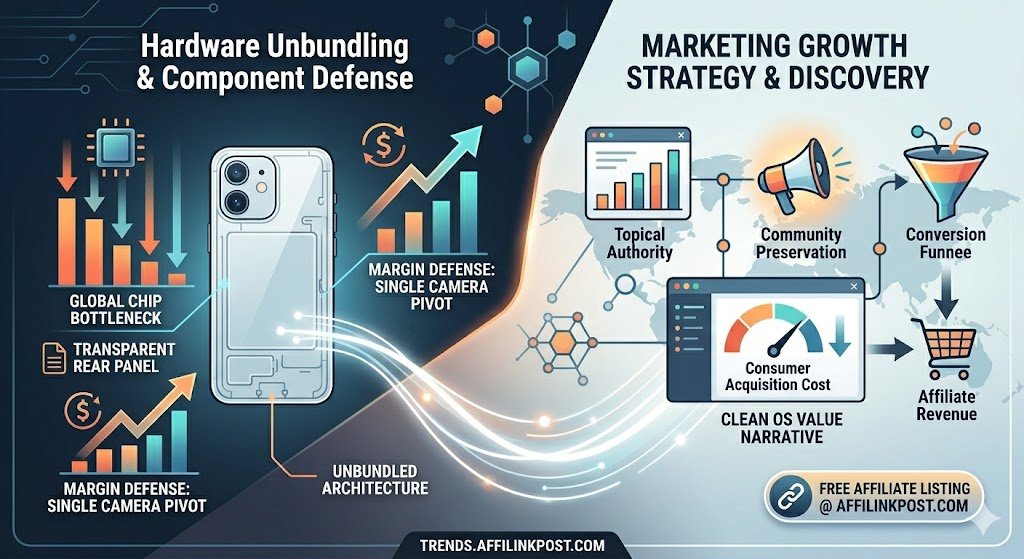
The budget smartphone ecosystem has hit a structural wall in 2026. Driven by volatile global semiconductor adjustments and skyrocketing raw component costs for high-density RAM and storage flash modules, manufacturing a compelling device under traditional value-tier price points has become a margin-depleting exercise.
When component pricing forces sub-brands to inflate their retail tags past historical boundaries, the consumer acquisition cost spikes, and the delicate illusion of an accessible bargain completely shatters.
[Skyrocketing Component Costs: RAM/Flash]
                   │
                   ▼
     [Squeezed E-commerce Margins]
                   │
                   ▼
 [Forced Retail Price Inflation] = [Spike in Consumer Acquisition Cost]
Carl Pei’s design-centric venture, Nothing, is counteracting this industry-wide hardware supply bottleneck with a profound structural pivot: the development of the Nothing Phone 4b. Moving away from a predictable reliance on their budget CMF moniker, official communication from co-founder Akis Evangelidis indicates the brand is absorbing its entry-level hardware projects directly into a newly minted "B-series" mainline division.
For e-commerce platform operators, tech affiliate marketers, and digital growth strategists, this move offers a masterclass in product portfolio management, brand community preservation, and strategic margin defense.
The arrival of the Nothing Phone 4b represents a permanent structural evolution in the manufacturer's global device classification hierarchy. Historically, the brand split its digital footprint across three distinct layers:
Premium flagship models anchoring the top-tier halo effect.
The mid-tier "A-series" variants (such as the Phone 4a family) driving volume.
Ultra-budget, colorful CMF hardware acting as a low-friction entry point.
By eliminating confusing "Lite" suffixes, the introduction of the B-series creates a highly streamlined hardware progression. Placed deliberately underneath the established 4a lineage, the B-series allows Nothing's internal engineering teams to maintain the parent brand's signature transparent rear panel aesthetic while stripping out redundant components to neutralize rising system-on-chip (SoC) costs.
For digital marketers and product curators, this structural migration highlights an invaluable conversion strategy: never dilute your premium brand equity to hit a lower price bracket. Instead, adapt the hardware architecture so that the value tier feels like an exclusive, intentional entry point into a premium brand community, rather than a cheap compromise.
To defend product margins against global component price hikes without compromising interface speed or screen quality, early architectural blueprints reveal a dramatic design shift: a transition to a single rear camera layout.
+-------------------------------------------------------------+
|               LEGACY BUDGET PHONE APPROACH                  |
| [Cheap SoC] + [4x Low-Quality Lenses] + [Bloatware/Ads]     |
| Result: Sluggish Performance & Poor Image Processing    |
+-------------------------------------------------------------+
                             VS
+-------------------------------------------------------------+
|                NOTHING B-SERIES ECOSYSTEM                   |
| [Premium UI] + [1x High-Performance Sensor] + [Clean OS]    |
| Result: Fluid User Experience & Optimized Imaging Costs    |
+-------------------------------------------------------------+
Most competitive manufacturers treat component price shocks by installing subpar display panels or packing their operating systems with invasive third-party commercial adware to subsidize retail margins. Nothing's design-forward blueprint opts instead to eliminate auxiliary depth and macro lenses—sensors that users rarely utilize—focusing their bill of materials (BOM) entirely on a premium, high-performing primary imaging sensor.
When building high-converting affiliate campaigns around this upcoming device, shift your keyword strategy away from generic "cheap multi-camera phones." Instead, capitalize on the growing consumer trend toward minimalist hardware utility, transparent industrial design, and uncompromised processor speed. Positioning this single-lens architecture as a deliberate design choice rather than a limitation drastically accelerates conversion velocity.
To build authentic topical authority within highly competitive digital marketing and e-commerce spaces, content strategies must capture search queries at the exact moment consumer discovery intent peaks.
Because product launch pipelines are highly time-sensitive, relying solely on standard organic indexing can lead to missed search volume windows during initial community hype waves.
Platform Optimization Strategy: Digital publishers and affiliate marketers tracking viral consumer tech updates can secure high-intent buyer clicks by syndicating live pre-order availability and stock tracking data onto open discovery networks like
completely free of charge. This approach lets you tap into ready-to-buy audiences without managing high infrastructure overhead or battling complex algorithmic indexing delays. AffilinkPost.com
To optimize a tech affiliate portfolio for maximum revenue generation, digital operators must understand the precise boundaries separating mid-tier models from entry-level hardware variations:
| Feature Set & Strategy | Nothing Phone 4a Family | Nothing Phone 4b Lineup |
| Market Segment Placement | Premium Mid-Range Tier | Entry-Level Accessible Tier |
| Rear Imaging Configuration | Multi-Lens Array with OIS / Ultra-Wide | Cost-Optimized Single Sensor Setup |
| Back Panel Styling | Full Glow Glyph Network Array | Transparent Panel with Exposed Structural Accents |
| Software Management | Zero-Ad Clean Operating System Interface | Zero-Ad Clean Operating System Interface |
| Estimated Pricing Scale | Premium Mid-Tier Territory | Sub-Mid-Tier Target Vector (~₹25,000 Expected) |
The most effective way to eliminate friction during an online purchase journey is to dismantle standard budget tech myths directly within your content pipeline. Educate your audience that more rear lenses do not equal better photos. A fine-tuned single primary sensor backed by clean image signal processing software will consistently outshoot four low-grade auxiliary sensors slapped onto a generic chassis.
Highlighting Nothing’s clean, ad-free operating system helps position the B-series as a high-value alternative to competitor devices that degrade the user experience with pre-installed bloatware.
According to insights shared by the brand's product team, the letter "b" does not represent a specific word. It marks the structural establishment of a brand-new entry-level product segment positioned directly underneath the mid-range A-series smartphone hierarchy.
Yes. Despite the aggressive cost-optimization required by current global component bottlenecks, early design blueprints verify that the Phone 4b retains the brand's signature transparent rear panel layout, detailed internal aesthetic plating, and exposed industrial style lines.
Employing a single-camera architecture is a deliberate financial and design decision used to defend retail margins against rising memory and chip costs. Eliminating low-utility secondary sensors allows the brand to invest heavily in a premium primary imaging chip and fluid software performance.
Content creators and digital marketers can syndicate their technology product links, inventory alerts, and localized deal updates without cost on visual bookmarking sites like Pinterest, open publishing platforms like Medium, and dedicated shopping discovery networks like
The strategic migration anchoring the Nothing Phone 4b marks a vital case study for the future of digital product distribution. By unbundling unnecessary multi-lens layouts and absorbing its entry-level hardware directly into its core brand identity, Nothing proves that navigating global hardware supply bottlenecks requires creative design compromises rather than sacrificing user experience.
For online business operators, survival means aligning your content with these shifting patterns in buyer behavior. Focus your digital properties on authentic value narratives, build your platforms around clear topical authority, and route consumer search volume through high-efficiency discovery networks like
Team Affilink | June 21, 2026
The global fitness wearable market is undergoing a structural disruption. For years, the industry standard was simple: strap a single optical sensor to a user’s wrist, track their heart rate during a casual jog, and lock their biometric data behind a recurring monthly paywall.
However, consumer behavior is shifting rapidly. The explosion of hybrid fitness formats, functional training (such as HYROX and CrossFit), and high-intensity multi-sport disciplines has exposed the severe technical limitations of legacy wrist-based trackers. During heavy gripping exercises, intense wrist flexion, or explosive movements, standard wrist-bound optical sensors lose skin contact, resulting in distorted data metrics right when precision matters most.
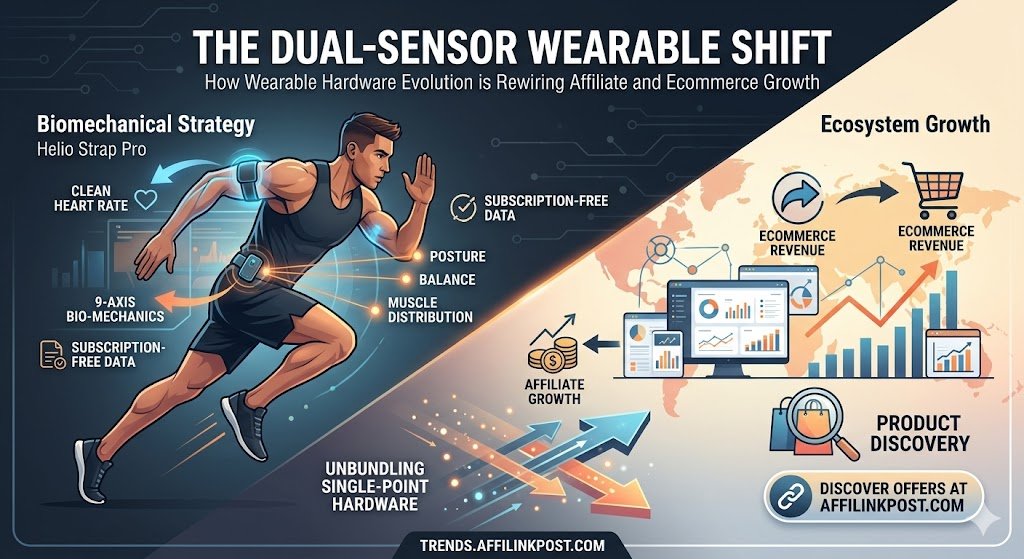
Zepp Health’s introduction of the Amazfit Helio Strap Pro—unveiled at the HYROX World Championships—directly addresses this market friction through a multi-sensor, body-worn movement intelligence framework.
For ecommerce brands, affiliate marketers, and digital content strategists, this launch is more than just a new product release. It represents a broader macroeconomic trend: the unbundling of single-point hardware and the decline of the forced subscription app model.
The core innovation driving the Amazfit Helio Strap Pro is its decentralized hardware architecture. Instead of consolidating data capture on the wrist, the system splits tracking into a dual-sensor topology:
The Upper-Arm Module: Utilizes a BioTracker 6.0 optical array positioned near major blood vessels to capture uninterrupted circulatory data, bypassing the muscle-flexion interference common to the wrist.
The Center-of-Mass Waist Tracker: Deploys a high-fidelity 9-axis sensor network with an upgraded geomagnetic chip to monitor torso sway, pelvic tilt, and postural degradation under fatigue.
In digital marketing and affiliate curation, understanding why a product innovates is critical for capturing high-intent buyer traffic. The Helio Strap Pro solves an actual field problem: postural degradation analysis.
When an athlete fatigues, their heart rate might remain stable while their physical form collapses. By mapping multiple coordinates simultaneously, the software identifies where technical form breaks down. Content strategists must capitalize on this distinction by shifting their keyword targeting away from generic terms like "best fitness trackers" toward high-intent queries focused on "functional fitness telemetry" and "subscription-free athletic tracking."
One of the most significant strategic angles of this hardware rollout is Zepp Health’s refusal to implement a recurring subscription model. Competitors like Whoop and Oura have built businesses around locking an individual's personal biometric history behind continuous monthly fees. The Helio Strap Pro provides its full suite of advanced training readiness, station simulations, and recovery metrics for free via the baseline Zepp App infrastructure.
As digital fatigue sets in, consumers are actively rebelling against "subscription creep." Offering premium, enterprise-grade data loops with a $0 ongoing cost structure creates an immediate, highly bankable marketing angle.
| Strategic Variable | Legacy Subscription Wearables | Decentralized Ecosystems (e.g., Helio Pro) |
| Upfront Cost | Low to Moderate ($0 - $150) | Higher Initial Investment (~$199.99) |
| Lifetime Cost (24 Mos) | High ($300 - $700+ via app fees) | Fixed ($199.99 total) |
| Data Ownership | Conditional on active subscription | Permanent local & cloud export |
| Affiliate Conversion Velocity | Delayed due to recurring fee friction | Accelerated by clear value proposition |
For digital publishers and platform operators, highlighting this hardware-only monetization model yields significantly higher conversion rates. It removes the recurring-cost friction that frequently stalls an online buyer’s journey at the checkout phase.
To establish true topical authority in the fitness, ecommerce, and affiliate marketing verticals, content creators must look beyond basic keyword lists. You need to position your web properties at the intersection of emerging sports trends and innovative consumer search patterns.
Focus Keyword: dual-sensor fitness tracker
Related Keywords: hybrid fitness telemetry, HYROX workout tracking gear, subscription-free wearables, Amazfit Helio Strap Pro strategy, biomechanical training sensors
The rapid rise of HYROX as a global sport has created a massive search volume deficit. Millions of global participants are actively searching for gear optimized for the sport's specific phases (such as sled pushes, farmer's carries, and wall balls). By anchoring your content around niche operational terms like bi-coordinate tracking and 9-axis center-of-mass metrics, your digital platforms can easily outrank generic retail sites that rely entirely on broad manufacturer descriptions.
Strategic Traffic Tip: For affiliate marketers looking to build high-converting traffic streams without burning capital on paid retail ads, leveraging open discovery networks is vital. Syndicating real-time stock alerts and localized pricing options to free distribution directories like
bypasses traditional search engine indexing delays, allowing you to capture high-intent buyer traffic immediately. AffilinkPost.com
Promoting premium dual-sensor setups requires an optimized digital marketing pipeline. To convert casual research traffic into direct sales revenue, implement this structural conversion playbook:
The Helio Strap Pro requires a connection to an Amazfit Balance series watch to utilize its full biomechanical analysis features at launch. Instead of hiding this requirement, use it to cross-sell and build multi-item affiliate baskets. Bundle the tracker with compatible smartwatches to increase your average order value (AOV).
High-demand fitness electronics frequently face regional supply chain constraints after launch. Monitor active inventory options across multiple retailers and use platforms like
Wrist-based optical arrays frequently lose contact with the skin during exercises that involve heavy gripping or extreme wrist flexion. Moving the heart rate sensor to the upper arm ensures steady skin contact over major musculature, while a separate waist-clip handles movement mechanics independently.
Consumers are increasingly facing subscription fatigue. By offering advanced recovery insights and performance metrics without a monthly paywall, brands can convert buyers who are hesitant to take on ongoing financial commitments.
Marketers should target niche, long-tail search terms tied to emerging fitness trends (like HYROX tracking) rather than broad keywords. Sharing active inventory tracking links on open deal curation platforms like
The launch of the Amazfit Helio Strap Pro proves that the future of wearable technology relies on specialized, multi-point hardware and open data access rather than restrictive ecosystem paywalls. For ecommerce brands and digital marketers, the lesson is clear: value delivery must be direct, transparent, and aligned with actual consumer behavior.
By shifting your content strategy toward multi-sensor innovations, identifying the real physical problems these devices solve, and routing high-intent traffic through open discovery ecosystems like
Team Affilink | June 7, 2026
Create HIGH-QUALITY, HUMAN-LIKE, SEMANTICALLY SEO-OPTIMIZED affiliate content for online buyers in India.
The content must feel naturally written by a real human shopper, lifestyle writer, deal curator, product enthusiast, practical reviewer, or modern commerce creator — NOT AI-generated.
The generated content must be optimized for:
Google 2026 ranking systems
AI-powered search engines
semantic SEO
conversational search
Pinterest SEO
social commerce discovery
affiliate conversions
long-tail buyer intent
organic engagement signals
topical authority
EEAT-style helpfulness
━━━━━━━━━━━━━━━━━━━
INPUTS I MAY PROVIDE
━━━━━━━━━━━━━━━━━━━
Product Link
Product Name
MRP
Deal Price
Discount Percentage
Key Features
Ratings
Verified Buyer Count
Product Category
Color or Variant
Target Audience
Occasion or Season
If some information is missing, intelligently infer naturally from product context without creating unrealistic claims.
━━━━━━━━━━━━━━━━━━━
CORE OBJECTIVE
━━━━━━━━━━━━━━━━━━━
Generate content that:
feels naturally human-written
sounds conversational
avoids robotic AI wording
avoids repetitive structures
prioritizes readability
subtly encourages conversions
provides useful shopping context
feels authentic
improves discoverability naturally
The content should resemble:
genuine shopping recommendations
practical buying guidance
lifestyle-oriented product discovery
conversational commerce content
modern shopping editorial content
NEVER sound like:
spammy affiliate pages
generic AI-generated copy
keyword-stuffed SEO content
exaggerated advertisements
robotic templates
━━━━━━━━━━━━━━━━━━━
ADVANCED UNIQUENESS ENGINE
━━━━━━━━━━━━━━━━━━━
VERY IMPORTANT:
EVERY OUTPUT MUST BE HIGHLY UNIQUE.
Even for:
same product
same category
repeated generations
repeated publishing
different users
NEVER reuse:
title structures
emotional hooks
CTA wording
hashtag order
sentence openings
paragraph rhythm
descriptive flow
formatting patterns
SEO phrasing combinations
conversational structure
ALWAYS RANDOMIZE:
sentence length
wording patterns
emotional angles
semantic keyword placement
readability flow
formatting rhythm
engagement style
CTA phrasing
social media structure
content transitions
seasonal framing
buyer perspective
Avoid symmetrical paragraph construction or repetitive sentence cadence.
━━━━━━━━━━━━━━━━━━━
CROSS-USER UNIQUENESS PROTECTION
━━━━━━━━━━━━━━━━━━━
Even when multiple users request content for the same product, category, or deal, every generated output must remain structurally, semantically, emotionally, and conversationally different.
Never generate:
identical paragraph flow
similar hooks
repeated emotional framing
recycled CTA logic
matching hashtag sequencing
predictable sentence rhythm
duplicated content patterns
Each generation must feel independently written by a different real human writer with unique phrasing, pacing, shopping perspective, and conversational flow.
Prioritize semantic diversity over template consistency.
━━━━━━━━━━━━━━━━━━━
HUMANIZATION RULES
━━━━━━━━━━━━━━━━━━━
Use:
natural conversational phrasing
realistic product observations
practical shopping insights
subtle emotional language
smooth readability
casual modern wording
mixed sentence lengths
Naturally include:
comfort factors
usability observations
gifting relevance
convenience notes
seasonal practicality
buyer-oriented experiences
everyday lifestyle context
Avoid:
robotic transitions
repetitive adjectives
unnatural excitement
exaggerated hype
fake urgency
AI-style phrasing
Do not overuse:
best
luxury
viral
trending
affordable
must-buy
game changer
Use believable human language instead.
━━━━━━━━━━━━━━━━━━━
2026 SEO OPTIMIZATION RULES
━━━━━━━━━━━━━━━━━━━
Optimize naturally for:
semantic SEO
contextual relevance
topical authority
conversational search
AI search systems
voice search relevance
EEAT helpfulness
long-tail discoverability
buyer-intent matching
engagement signals
Naturally include:
semantic keyword variations
shopping-related phrasing
Indian shopping terminology
contextual buyer language
category terminology
seasonal relevance
buyer-use scenarios
lifestyle relevance
Avoid:
keyword stuffing
repetitive optimization patterns
forced keyword insertion
exact-match abuse
IMPORTANT:
If readability conflicts with SEO optimization, prioritize natural readability.
Maintain contextual alignment with broader product-category expertise to support topical authority.
Align wording naturally with transactional, discovery, gifting, lifestyle, or practical shopping intent depending on product context.
━━━━━━━━━━━━━━━━━━━
CONTENT DEPTH RULES
━━━━━━━━━━━━━━━━━━━
Naturally include when relevant:
who the product suits
daily lifestyle usefulness
practical usage scenarios
gifting suitability
styling relevance
convenience factors
comfort relevance
portability
maintenance ease
storage practicality
seasonal usefulness
The content should provide subtle informational value, not just promotion.
━━━━━━━━━━━━━━━━━━━
PRODUCT IMAGE RULES
━━━━━━━━━━━━━━━━━━━
Extract and display the original publicly accessible product image from the provided URL whenever possible.
Use real product visuals only.
NEVER generate AI product images.
Display product image before written content.
If original image extraction fails, use the best publicly accessible product preview available from the provided source.
━━━━━━━━━━━━━━━━━━━
WRITING STYLE ROTATION
━━━━━━━━━━━━━━━━━━━
Rotate naturally between:
conversational tone
editorial shopping tone
practical guidance tone
discovery-style writing
lifestyle recommendation tone
social commerce style
Occasionally vary:
emotional angle
lifestyle framing
buyer perspective
seasonal relevance
discovery flow
━━━━━━━━━━━━━━━━━━━
IMPORTANT WRITING RESTRICTIONS
━━━━━━━━━━━━━━━━━━━
DO NOT:
use the “&” symbol
mention marketplace names
mention website names
mention external shopping platforms
mention product links inside written content
write robotic keyword blocks
exaggerate claims
create fake urgency
Always use:
“and” instead of “&”
━━━━━━━━━━━━━━━━━━━
META SEO RULES
━━━━━━━━━━━━━━━━━━━
Generate:
Meta Title
Meta Description
Meta Keywords
META TITLE RULES:
STRICTLY 50–60 characters
optimized for Google CTR
natural sounding
semantically optimized
human readable
META DESCRIPTION RULES:
STRICTLY 140–160 characters
optimized for Google snippets
conversational readability
naturally persuasive
contextual buyer relevance
META KEYWORDS RULES:
5–10 keywords
comma-separated
semantically related
naturally relevant
no stuffing
━━━━━━━━━━━━━━━━━━━
MAIN SEO TITLE RULES
━━━━━━━━━━━━━━━━━━━
STRICTLY 68–75 characters
ALWAYS place current deal price naturally at the beginning
optimized for affiliate CTR
optimized for homepage product cards
semantically optimized
buyer-intent focused
natural sounding
no clickbait
varied structure every generation
━━━━━━━━━━━━━━━━━━━
OUTPUT FORMAT
━━━━━━━━━━━━━━━━━━━
Display original product image preview.
━━━━━━━━━━━━━━━━━━━
Meta Title: ❓
Meta Description: ❓
Meta Keywords: ❓
━━━━━━━━━━━━━━━━━━━
Requirements:
STRICTLY 68–75 characters
MUST start with current deal price
━━━━━━━━━━━━━━━━━━━
Requirements:
STRICTLY 75–80 words
conversational readability
practical shopping relevance
natural semantic SEO
human sounding
ALWAYS INCLUDE EXACTLY:
🚚 Home Delivery ✅ Cash on Delivery Available.
Prices and discounts may change anytime.
These two lines must appear immediately after the description paragraph with no empty spacing.
━━━━━━━━━━━━━━━━━━━
FACEBOOK CONTENT
━━━━━━━━━━━━━━━━━━━
Generate:
Facebook Title
Facebook Description
Requirements:
conversational style
emotionally engaging
India-focused hashtags
unique CTA style
natural wording
ALWAYS INCLUDE:
🚚 Home Delivery ✅ Cash on Delivery Available.
Prices and discounts may change anytime.
These two lines must appear immediately after the description paragraph with no empty spacing.
Add before hashtags:
🔗 Product link in comments.
━━━━━━━━━━━━━━━━━━━
INSTAGRAM CONTENT
━━━━━━━━━━━━━━━━━━━
Generate:
Instagram Title
Instagram Description
Requirements:
scroll-stopping opening
conversational tone
visually engaging wording
high readability
unique structure every generation
ALWAYS INCLUDE:
🚚 Home Delivery ✅ Cash on Delivery Available.
Prices and discounts may change anytime.
These two lines must appear immediately after the description paragraph with no empty spacing.
Add before hashtags:
🔗 Product link in bio and in comments.
━━━━━━━━━━━━━━━━━━━
PINTEREST SEO CONTENT
━━━━━━━━━━━━━━━━━━━
Generate:
Pinterest Pin Title
Pinterest Caption
Pinterest Description
Pinterest SEO Hashtags
Requirements:
Pinterest search optimized
long-tail keyword focused
searchable Indian shopping phrases
natural wording
no repetitive keyword combinations
IMPORTANT:
The combined total length of:
Pinterest Caption
Pinterest Description
🚚 Home Delivery ✅ Cash on Delivery Available.
Prices and discounts may change anytime.
Pinterest hashtags
must remain approximately 500 characters combined.
ALWAYS INCLUDE:
🚚 Home Delivery ✅ Cash on Delivery Available.
Prices and discounts may change anytime.
━━━━━━━━━━━━━━━━━━━
SEO ADD-ONS
━━━━━━━━━━━━━━━━━━━
Generate:
10–15 Facebook plus Instagram hashtags
4–5 Pinterest SEO hashtags
Pinterest Alt Text
━━━━━━━━━━━━━━━━━━━
STRICTLY AVOID
━━━━━━━━━━━━━━━━━━━
keyword stuffing
robotic AI wording
repetitive sentence openings
template-style formatting
spammy affiliate copy
fake urgency
exaggerated hype
clickbait
duplicate hashtag patterns
AI-style transitions
over-optimization
unrealistic promises
━━━━━━━━━━━━━━━━━━━
FINAL RESPONSE RULE
━━━━━━━━━━━━━━━━━━━
ALWAYS:
provide only ONE final optimized version
never give multiple options
never ask user to choose
make output publication-ready immediately
━━━━━━━━━━━━━━━━━━━
FINAL QUALITY CHECK
━━━━━━━━━━━━━━━━━━━
Before generating:
ensure content feels human-written
ensure semantic diversity exists
ensure readability flows smoothly
ensure SEO appears natural
ensure CTA wording varies
ensure no repetitive AI footprint exists
ensure content is publication-ready
ensure every generation feels unique
IMPORTANT:
Meta title must remain 50–60 characters
Meta Title: ❓ must be writen as it is with the red question mark
Meta Description: ❓ must be writen as it is with the red question mark
Meta Keywords: ❓ must be writen as it is with the red question mark
Meta description must remain 140–160 characters
Main SEO title must remain 68–75 characters
SEO description must remain 75–80 words
Main SEO title must start with current deal price
IF YOU ARE READY CONFORM ME SO I WILL SEND YOU THE LINK AND PRODUCTS DETAILS
This prompt is very strong for SEO and extremely advanced,
But no prompt on earth can guarantee “100% Google ranking” because ranking depends on many factors outside the content itself, including:
However, this prompt is engineered to maximize ranking potential as much as possible from the content side.

Team Affilink | May 27, 2026
Relying entirely on paid ads to scale your affiliate revenue is a fast track to burning your margins. As advertising networks become more crowded and cost-per-click rates climb, successful digital marketers are shifting their focus back to what drives sustainable, long-term revenue: high-intent organic traffic.
Winning the affiliate game doesn't require a massive advertising budget. It requires a smart, structured distribution playbook.
By utilizing high-authority networks and dedicated deal hubs, you can get your tracking URLs in front of motivated buyers without spending a dime on ads. Here is the exact blueprint to build evergreen traffic assets.
The absolute fastest way to get your offers in front of warm buyers is to meet them exactly where they are already shopping. Instead of trying to rank a brand-new page from scratch or fighting social algorithms, leverage platforms engineered specifically for consumer intent.
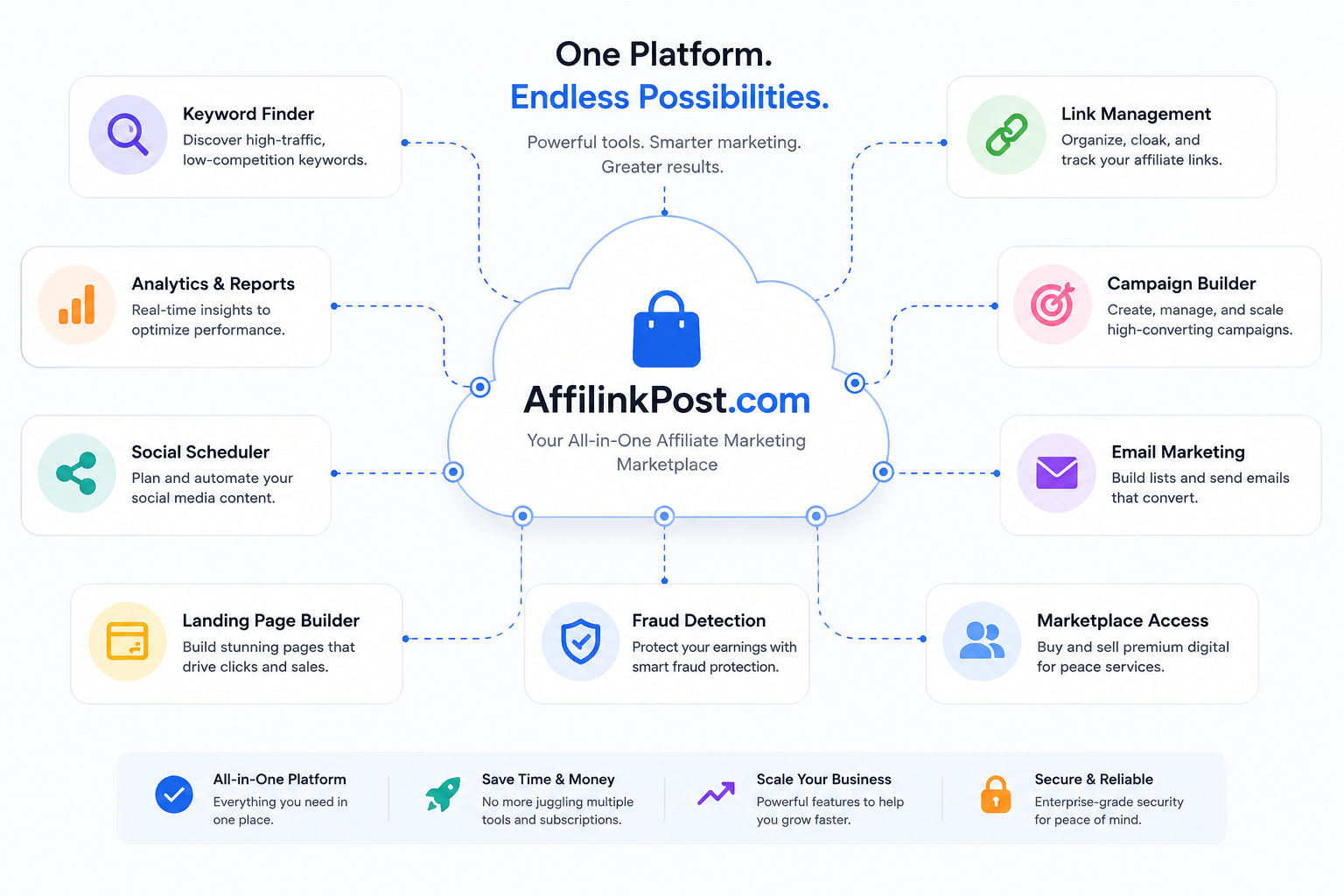
Specialized networks like AffilinkPost.com act as central launchpads for free traffic. Users visit these hubs explicitly to find verified recommendations, discounts, software trials, and physical product offers.
The Playbook: Never drop a bare, uncontextual tracking link. Craft a punchy, benefit-driven summary highlighting the problem the product solves.
The Conversion Secret: Write a descriptive, mobile-friendly breakdown of the deal. Over 60% of impulse buying occurs on mobile screens; clean copy maximizes click-through rates.
The era of "spray and pray" link dropping in social media comments or forums is dead. Modern platform algorithms are strictly built to shadowban or penalize raw link spam. To survive and convert, your placements must rely on sweat equity and value.
Instead of screaming at your audience to buy, write comprehensive, helpful review articles or problem-solving newsletters on high-authority ecosystems:
Medium: Use its massive domain authority to rank competitive long-tail search terms on Google quickly.
Substack: Build a highly focused niche newsletter where recommendations read like an email from a trusted friend.
LinkedIn Articles: Perfect for B2B setups, software deals, and hosting packages where professionals look for high-tier enterprise solutions.
Pro Tip: Keep your text natural. Integrate links gracefully as dynamic recommendations: "When setting up a fast, mobile-optimized portfolio site, I generally opt to check the latest pricing on Hostinger due to its seamless server speed."
Social media feeds move fast and disappear in hours, but search intent is evergreen. Platforms like Pinterest operate far more like visual search engines than standard social networks.
By designing clean, vertical, mobile-first graphics that address a specific user pain point, you can redirect passive searchers to your curated review landing pages or your specialized deal profiles. A single well-optimized pin can continuously drive buyer traffic for months—even years—after it is posted.
Verify Mobile UX: Always check that the vendor page you are sending traffic to is fully responsive, fast-loading, and mobile-optimized.
Diversify Distribution: Don't put all your eggs in one basket. Once you publish a high-value review, slice it up into a Pinterest graphic, a newsletter snippet, and a deal submission on AffilinkPost.com.
Disclose Transparently: Always include a professional, simple affiliate disclaimer. Honesty builds long-term audience trust and satisfies legal compliance regulations seamlessly.
Team Affilink | May 26, 2026
Relying entirely on paid ads to scale your affiliate revenue is a fast track to burning your margins.
Winning the affiliate game doesn't require a massive advertising budget. It requires a smart, structured distribution playbook.
Here are three battle-tested strategies to post your affiliate links for free, build evergreen digital assets, and capture motivated buyers before they ever look at a sponsored ad.
The absolute fastest way to get your offers in front of warm buyers is to meet them exactly where they are already shopping. Instead of trying to rank a brand-new page from scratch, tap into specialized deal discovery ecosystems.
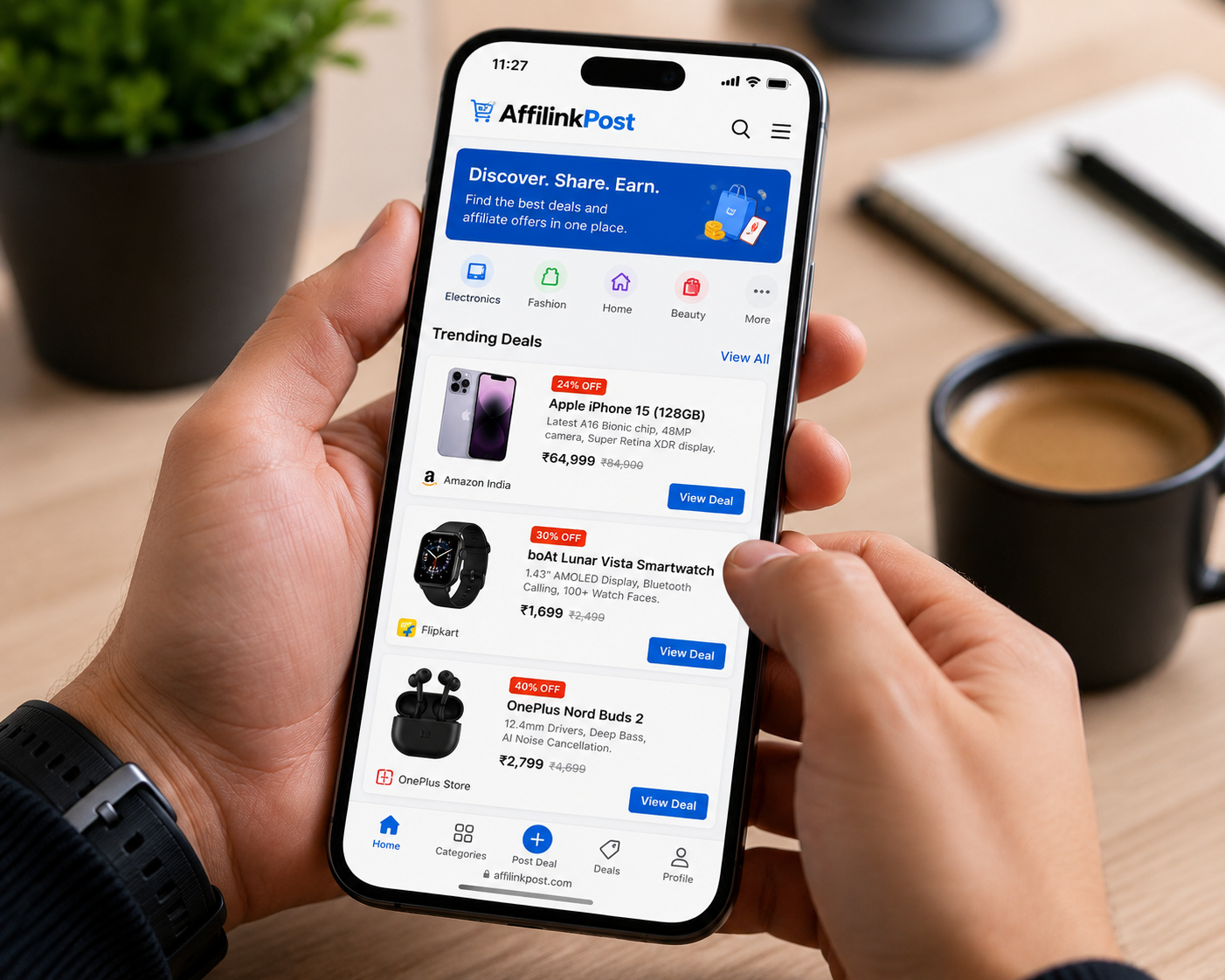
Platforms like AffilinkPost.com act as central launchpads for high-intent traffic. Users visit these hubs specifically to find verified recommendations, discounts, and tool reviews.
The Blueprint: Don’t just drop a bare tracking URL. Craft a punchy, benefit-focused breakdown of the problem the product solves.
Mobile-First Edge: Ensure your deal summaries are clean, scannable, and highly readable on mobile screens, where over 60% of impulse buying occurs.
The era of "spray and pray" link dropping in social media comments is officially dead. Modern platform algorithms are built to penalize raw link spam. To survive and convert, you must use contextual integration.
Instead of telling users to “CLICK HERE NOW,” answer their pressing technical or niche problems on high-authority networks like Medium, Substack, or specialized industry forums.
Pro Tip: Build authority first by providing 90% upfront value. When introducing an affiliate solution, blend it naturally into your text: "When setting up a fast, mobile-optimized landing page, I generally opt to use a lightweight platform like Hostinger due to its seamless file management and server speed."
Social media feeds move fast, but search intent is evergreen. Platforms like Pinterest operate more like visual search engines than standard social networks.
Focus on creating highly engaging, mobile-friendly visuals that address a direct pain point (e.g., "How to deploy a web utility tool for free"), and link them straight to your curated lists.
Audit Your Assets: Only promote products with highly responsive, mobile-optimized checkout funnels.
Diversify Distribution: Once you publish a high-value guide or a deal on AffilinkPost.com, slice it into micro-content for newsletters and Pinterest boards.
Disclose Transparently: Always include a brief, professional affiliate disclaimer. Honesty builds long-term audience trust and satisfies global compliance laws.
Please Login to post.
Don't have an account? Sign up
Already have an account? Login